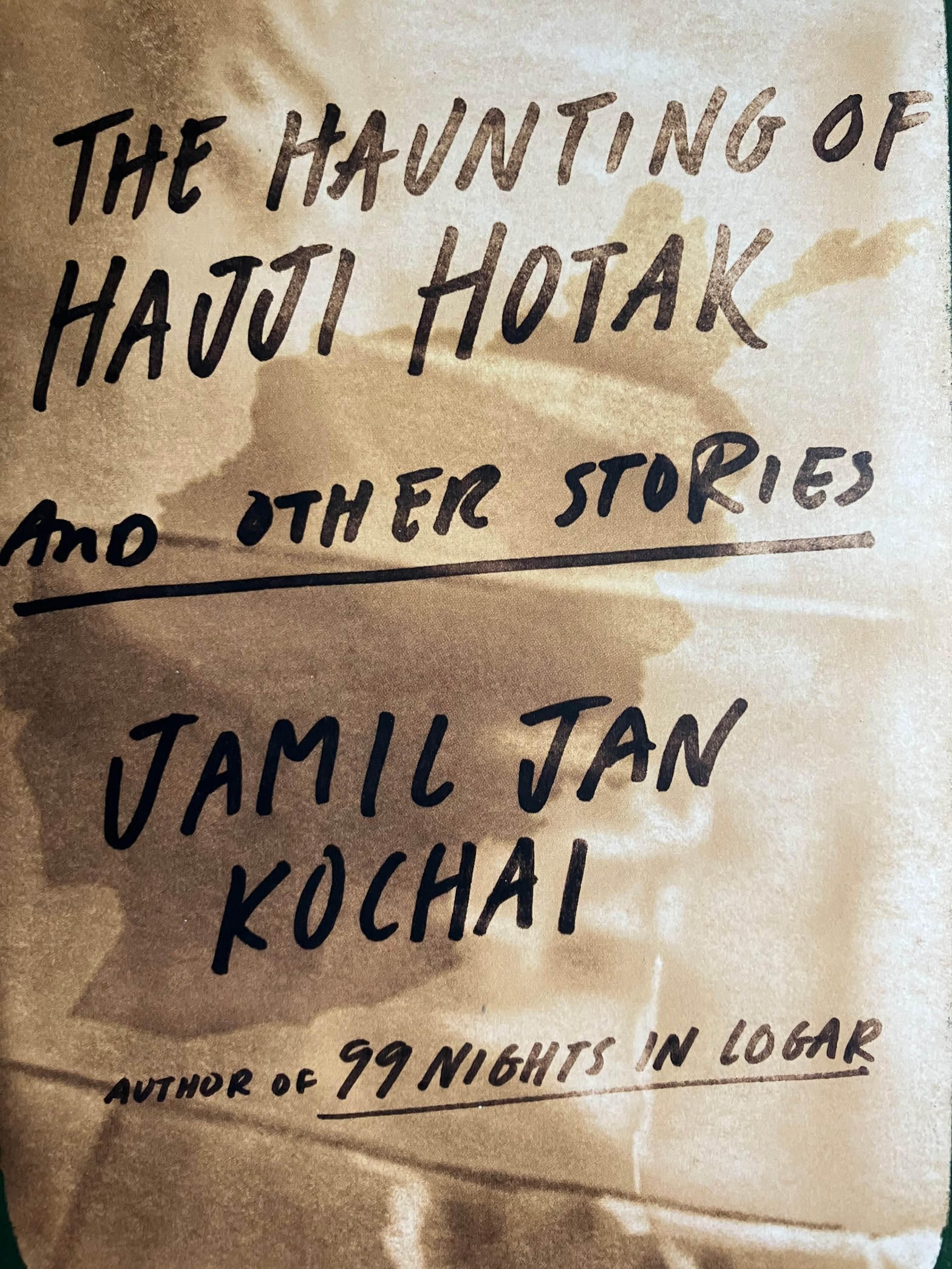
I’m continuing to work my way through titles that made waves in 2021 and 2022, and this is my favorite so far. If you are in the market for masterful short stories, Jamil Jan Kochai’s collection will not disappoint. A National Book Award finalist, The Haunting of Hajji Hotak feels like it enfolds the entire world in its embrace, spanning the United States and Afghanistan, teen gamers and aging grandmothers, U.S. soldiers and Afghan villagers.
In “Playing Metal Gear Solid V: The Phantom Pain,” a teenage boy fantasizes that his favorite video game might allow him to play out his family history so that it turns out differently. The story “Return to Sender” has an undercurrent of horror as an idealistic Afghan American couple believes they can help save Afghanistan from its turbulent violence, without becoming targets themselves. In the titular story, an American agent is the ghost that haunts Hajji Hotak, eventually falling in love with the Afghan family they are assigned to surveil. The agent attempts to justify their overinvolvement by reframing it as “helping,” but with the same paternalistic mindset the West has used to justify atrocities in Afghanistan for centuries.
Stories echo and mirror and speak to each other in ways that only deepen each text. But it isn’t just the subject matter that makes the book riveting. Kochai also demonstrates spectacular technical prowess. The story “Enough!” is a single sentence that stretches over 12 pages as the family matriarch contemplates her frustrations with her children and her grief over her dead son, only to wake up in one moment to what her life truly is. A murderous American soldier is (quite justly) turned into a goat. An Afghan American PhD student is (quite unfairly) turned into a monkey for his religious failures.
These transformations lead to further transformations, which Kochai uses to explore the ways violence and misguided morality can destroy entire communities and families. Somehow, through it all, Kochai manages to be both critical and deeply humanizing of all his characters. If you love literary short stories with a dark yet deeply humanist sensibility, Kochai will not disappoint.

 The Trailer Park MFA